How to Brief Your Creative Team for Better Results (Template Included)
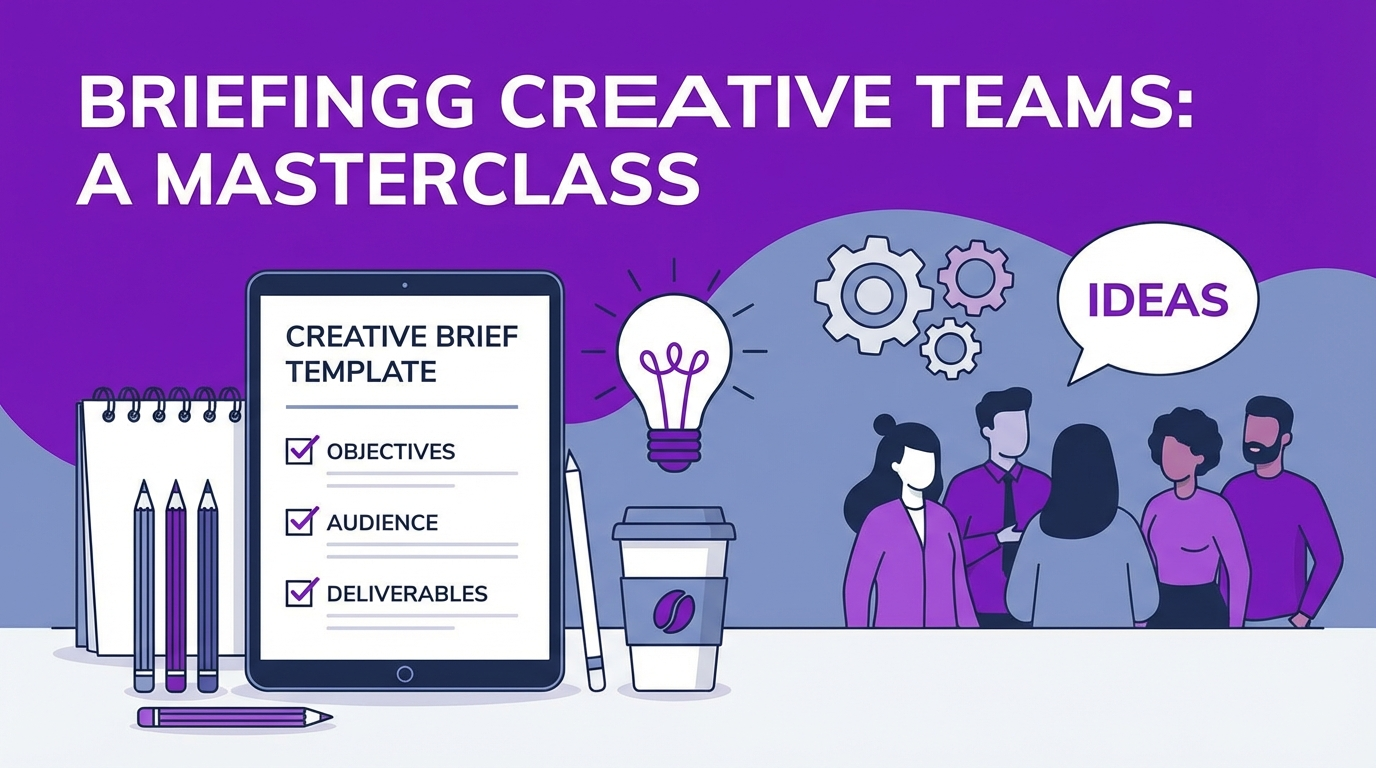
The quality of creative output is directly proportional to the quality of the brief. Full stop.
We've seen it thousands of times at FifthBoston Media Group: vague briefs produce vague work that requires endless revisions. Specific briefs produce targeted work that often nails it on the first round.
This isn't about being demanding or micromanaging creativity. It's about giving your creative team the information they need to succeed.
Why Most Briefs Fail
Let's start with a typical bad brief:
> "We need a social media graphic for our new product launch. Make it pop! Attached is our logo. Thanks!"
What's wrong here? Everything:
The creative team has to guess. And guessing leads to revisions.
The Anatomy of an Effective Brief
A great creative brief answers these questions clearly:
1. What Are We Making?
Be specific about deliverables:
**Example:** "Instagram carousel post (1080x1080), 5 slides, final files in PNG plus editable Figma source."
2. Who Is the Audience?
The same message looks completely different when designed for:
**Example:** "Target audience is marketing managers at mid-size B2B companies, ages 30-45, who are frustrated with their current design agency's slow turnaround."
3. What's the Objective?
Every piece of creative should have a clear goal:
**Example:** "Objective is to drive traffic to our pricing page. Success = click-through to fifthboston.com/pricing."
4. What's the Core Message?
Distill the communication to its essence:
**Example:** "Main message: Unlimited design for a flat monthly fee. Supporting: 48-hour turnaround. CTA: See pricing."
5. What's the Tone?
Describe the feeling the piece should evoke:
**Example:** "Tone should be confident and professional, but not corporate or stiff. Think premium but accessible."
6. What Are the Constraints?
Every project has parameters:
**Example:** "Must use brand blue (#0066FF) as primary. Include new tagline: 'Design. Delivered.' Cannot use competitor logos in comparison."
7. What's the Timeline?
Be specific about deadlines:
**Example:** "First draft by Thursday EOD. Final needed by Monday 9am for campaign launch, date is firm."
8. What Does Success Look Like?
Show examples of work you like:
**Example:** "Attached are three examples we like, notice the clean layouts and bold typography. Also attached is our last attempt that felt too cluttered."
The Creative Brief Template
Copy and customize this template for your projects:
---
PROJECT BRIEF
**Project Name:** [Descriptive name]
**Requested By:** [Your name]
**Date Submitted:** [Today's date]
**Priority Level:** [Urgent / High / Standard]
---
DELIVERABLES
**File Format Required:** [PNG, PDF, Source files, etc.]
---
AUDIENCE
Who are we talking to?
[Describe demographics, role, pain points, what they care about]
---
OBJECTIVE
What should this creative accomplish?
[Specific goal and how success will be measured]
---
KEY MESSAGE
Primary message: [One sentence max]
Supporting message: [One sentence if needed]
Call-to-action: [What should they do?]
---
TONE & STYLE
Tone: [2-3 descriptive words]
Visual direction: [Clean/bold/playful/premium/etc.]
References: [Links or attached examples]
---
BRAND REQUIREMENTS
---
CONSTRAINTS
---
TIMELINE
Deadline flexibility: [Flexible / Firm]
---
ADDITIONAL CONTEXT
[Anything else the creative team should know, campaign context, historical performance, internal politics, etc.]
---
Pro Tips for Better Briefs
Be Specific, Not Prescriptive
There's a difference between:
Give creative teams room to explore while being clear about what success looks like.
Provide Context Generously
The more context your creative team has, the better decisions they'll make. Share:
Consolidate Feedback
Nothing derails projects like conflicting feedback from multiple stakeholders. Designate one person to consolidate all input before submitting.
Trust the Process
If you've hired good creative people and given them a good brief, let them do their job. Avoid the temptation to prescribe solutions before they've had a chance to explore.
The ROI of Good Briefs
We've tracked the numbers at FifthBoston Media Group:
That's 3x more back-and-forth when briefs are incomplete. Multiply that by every project, and you're looking at massive inefficiency.
Investing 15-20 minutes in a proper brief saves hours of revision cycles. Every single time.
---
*Need help with your creative projects? Our team at FifthBoston Media Group loves a good brief, and we're pretty good at asking the right questions when we need more context. [Get in touch](/contact) or [see our plans](/pricing) to get started.*
Fifth Boston
Creative agency specializing in brand strategy, design, and digital marketing.